

You know you should be posting on social media. But how often? Post too little and you disappear from feeds. Post too much and you burn out or annoy your followers.
The answer depends on your platform, your resources, and your audience. Here is a practical breakdown.
Key Takeaways
- Consistency beats frequency. Posting 3 times a week every week outperforms daily posting that stops after two weeks.
- Each platform has its own sweet spot. Instagram favors 3-5 posts/week. TikTok rewards daily posting. Pinterest wants 5-15 pins/week.
- Quality over quantity, always. One great post beats five mediocre ones. Engagement rate drops when content quality dips.
- Batch and schedule. The only sustainable way to maintain posting frequency is to create content in batches and automate publishing.
Why posting frequency matters for e-commerce
Social media algorithms reward accounts that post regularly. When you go quiet for a week, your reach drops. When you come back, the algorithm doesn’t immediately trust you again. It tests your content with a smaller audience first. You essentially start from a weaker position every time you take a break.
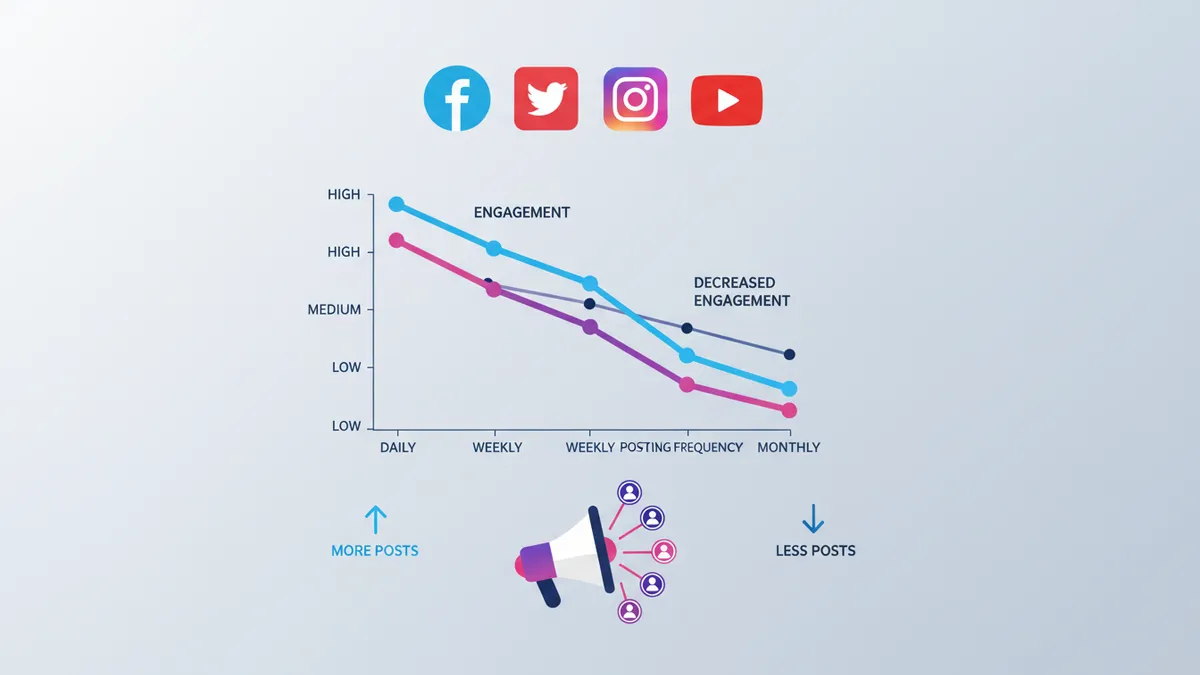
For e-commerce stores specifically, frequency matters even more. Your products need repeated exposure to drive purchases. Research shows consumers need to see a product 7-8 times before buying. Every post is a touchpoint in that journey.
But frequency alone won’t save you. Posting five low-effort product shots a week will hurt more than help. The algorithm tracks engagement rate, not just post count. If your posts consistently get low engagement, the algorithm shows your content to fewer people. Even the ones who follow you.
The goal is to find the minimum posting frequency that keeps you visible while maintaining content quality. That number is different for every platform.
Platform-by-platform posting frequency guide
Instagram: 3-5 feed posts per week
Instagram’s algorithm prioritizes recency and engagement. Accounts that post 3-5 times a week see the strongest combination of reach and engagement rate.
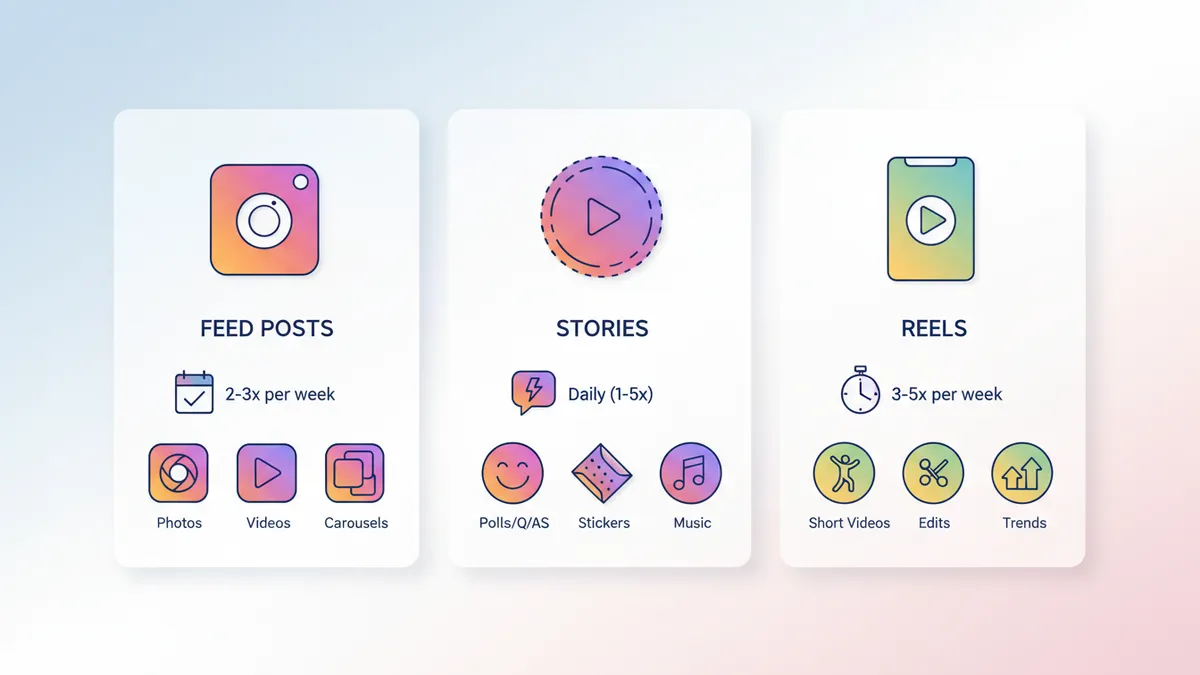
Feed posts: 3-5 per week. Mix product content, educational carousels, and user-generated content. For a complete Instagram strategy for your Shopify store, see our Instagram marketing guide.
Stories: Daily, or at minimum 3-4 times per week. Stories keep you at the top of follower feeds. They disappear after 24 hours, so frequency matters more than perfection here.
Reels: 2-4 per week. Reels reach non-followers and are Instagram’s biggest growth lever right now. Short product demos, behind-the-scenes clips, and trending audio content perform well.
What happens if you post less? Below 3 posts per week, most e-commerce accounts see a noticeable drop in reach and profile visits. You can survive on 2 per week, but growth slows significantly.
TikTok: 3-7 videos per week
TikTok rewards volume more than any other platform. The algorithm evaluates each video independently. A bad video won’t tank your next one. This means you can afford to post more and experiment.

Minimum: 3 videos per week. This keeps the algorithm feeding your content to new audiences.
Ideal: 5-7 videos per week. Stores that go viral usually post daily for several weeks before a video takes off. Volume increases your odds. Learn more in our guide on how small stores are using TikTok to go viral.
Format tip: You don’t need polished content. TikTok thrives on authentic, unfiltered videos. Packing orders, product reveals, and day-in-the-life content consistently outperforms studio-quality ads.
Pinterest: 5-15 pins per week
Pinterest is not a social media platform. It’s a visual search engine. Pinning frequency affects your visibility in search results, not just feeds.
Minimum: 5 pins per week. This keeps your account active in the algorithm.
Ideal: 10-15 pins per week. Mix fresh pins (new images/videos) with repins of your own content. Fresh pins get priority in distribution. Discover why Pinterest is the underrated traffic source for Shopify stores.
Key difference: Pinterest content is evergreen. A pin you create today can drive traffic to your store for months. On Instagram or TikTok, content lifespan is measured in hours or days. This makes Pinterest especially efficient for stores with limited content resources.
Facebook: 3-5 posts per week
Organic reach on Facebook is low for business pages. But it still has 3 billion monthly users, and certain demographics, especially 35+, use it actively.
Minimum: 3 posts per week. Fewer than that and the algorithm deprioritizes your page.
Ideal: 4-5 posts per week. Mix product posts, links to blog content, customer reviews, and video. Facebook Groups also offer higher organic reach than pages.
Pro tip: If your audience skews older or you sell products in categories like home goods, health, or family products, Facebook is still worth the investment.
X (Twitter): 3-5 posts per week (or daily)
X rewards high-frequency posting. Tweets have the shortest lifespan of any platform, often just 15-20 minutes of peak visibility.
Minimum: 3 posts per week. Keeps your account from going stale.
Ideal: 1-3 posts per day. For e-commerce stores, this works well if you mix product updates, industry commentary, customer interactions, and links to your content.
Reality check: Most e-commerce stores don’t need X as a primary platform. If your audience isn’t there, skip it entirely and invest that time in Instagram, TikTok, or Pinterest instead.
LinkedIn: 2-3 posts per week
LinkedIn is relevant if you sell B2B products, wholesale, or want to build a founder brand alongside your store.
Ideal: 2-3 posts per week. Quality matters more on LinkedIn than on any other platform. One thoughtful post outperforms five generic ones.
The real rule: consistency over frequency
Here’s the truth that matters more than any posting schedule: the best frequency is the one you can sustain.
A store that posts 3 times per week every week for 6 months will outperform a store that posts daily for 3 weeks then burns out and goes silent for a month.
Algorithms track consistency patterns. They learn when your audience expects content from you. Breaking that pattern, especially with long gaps, signals to the algorithm that your account isn’t reliable. You lose distribution, and rebuilding it takes time.
Start with the minimum. Post 3 times per week on your primary platform. Do that for 4 weeks without missing a beat. Then add frequency or platforms once you’ve built the habit.
How to find your ideal posting frequency
The numbers above are starting points. Your actual ideal frequency depends on your store, your audience, and your capacity. Here’s how to find it.
Step 1: Audit your current output
Look at your last 30 days. How many times did you post? On which platforms? What was your engagement rate?
If you have been posting 2 times a week and getting strong engagement, bumping to 4 might double your reach without hurting quality. If you have been posting daily and seeing declining engagement, you might be over-posting.
Step 2: Test for 4 weeks
Pick a frequency and commit to it for 4 full weeks. Don’t change anything else. Same content quality, same posting times.
Track these metrics each week:
- Reach per post (are you getting in front of people?)
- Engagement rate (are people interacting?)
- Profile visits and link clicks (are people taking action?)
- Follower growth (is your audience growing?)
Step 3: Adjust based on data
If engagement rate stays steady or improves as you increase frequency, keep going. If engagement rate drops noticeably, you’ve likely passed the quality threshold. Scale back one post per week and reassess.
The data will tell you exactly where your sweet spot is. Most e-commerce stores land between 3-5 posts per week on their primary platform.
Sample weekly posting schedules
Here are three templates based on different resource levels. Pick the one that matches your situation.
Starter: 3 posts per week (1 platform)
Best for solo founders with limited time. Focus on one platform, usually Instagram.
| Day | Content type | Format |
|---|---|---|
| Monday | Educational | Carousel or Reel |
| Wednesday | Product | Lifestyle photo or short video |
| Friday | Social proof | Customer review or UGC |
Time commitment: 2-3 hours per week using batching.
Growth: 5 posts per week (1-2 platforms)
Best for stores ready to scale their social presence.
| Day | Platform 1 (Instagram) | Platform 2 (TikTok) |
|---|---|---|
| Monday | Educational carousel | Quick tip video |
| Tuesday | Product Reel | Product demo |
| Wednesday | UGC or review | Behind-the-scenes |
| Thursday | Brand story | Trending sound + product |
| Friday | Product carousel | Packing orders |
Time commitment: 4-5 hours per week with batching and scheduling.
Scale: 7+ posts per week (2-3 platforms)
Best for stores with dedicated content resources or AI-assisted workflows.
| Day | TikTok | ||
|---|---|---|---|
| Monday | Educational carousel | Product tip | 2 product pins |
| Tuesday | Product Reel | Behind-the-scenes | 2 lifestyle pins |
| Wednesday | UGC repost | Trending content | 2 product pins |
| Thursday | Brand story | Product demo | 2 blog pins |
| Friday | Product carousel | Packing orders | 2 product pins |
| Saturday | Story-only day | Quick Reel | - |
| Sunday | - | - | 1 inspiration pin |
Time commitment: 6-8 hours per week. Use batching and a content calendar to stay organized.
How to maintain frequency without burning out
Knowing your ideal frequency is one thing. Actually maintaining it is another. Here are four strategies that make it sustainable.

Batch your content creation
Don’t create one post per day. Block out 2-3 hours once a week and create all your content for the next 7-14 days. Batching keeps you in a creative flow and eliminates the daily scramble.
Turn your product photos into multiple pieces of content to stretch every shoot further.
Schedule everything in advance
Manual posting is the first thing that falls apart when you get busy. Use a scheduling tool to queue posts ahead of time so they publish automatically. You stay visible even on your busiest days. For a full breakdown of what to automate and what to keep manual, see our automation guide.
IDEQO lets you schedule posts across Instagram, TikTok, Facebook, Pinterest, and X from one dashboard. Plan your week in one session, then focus on running your store.
Use AI for first drafts
Writing captions from scratch every week gets exhausting. Use AI to generate first drafts of your captions, then edit them to match your voice. This cuts writing time in half while keeping your content authentic. Check out our AI content creation guide for practical workflows.
IDEQO’s Bulk Content Generator can create 30 days of captions across multiple platforms in minutes. You edit, schedule, and publish.
Repurpose across platforms
One piece of content should never live on just one platform. A product Reel on Instagram becomes a TikTok with a different caption. A blog post becomes 3 carousel slides. A customer review becomes a Story, a pin, and a quote graphic.
Repurposing triples your output without tripling your effort. A solid social media strategy builds repurposing into the workflow from the start.
Common posting frequency mistakes
Starting too aggressively. Committing to daily posting on three platforms when you have never posted consistently before. You will burn out within two weeks. Start small and build up.
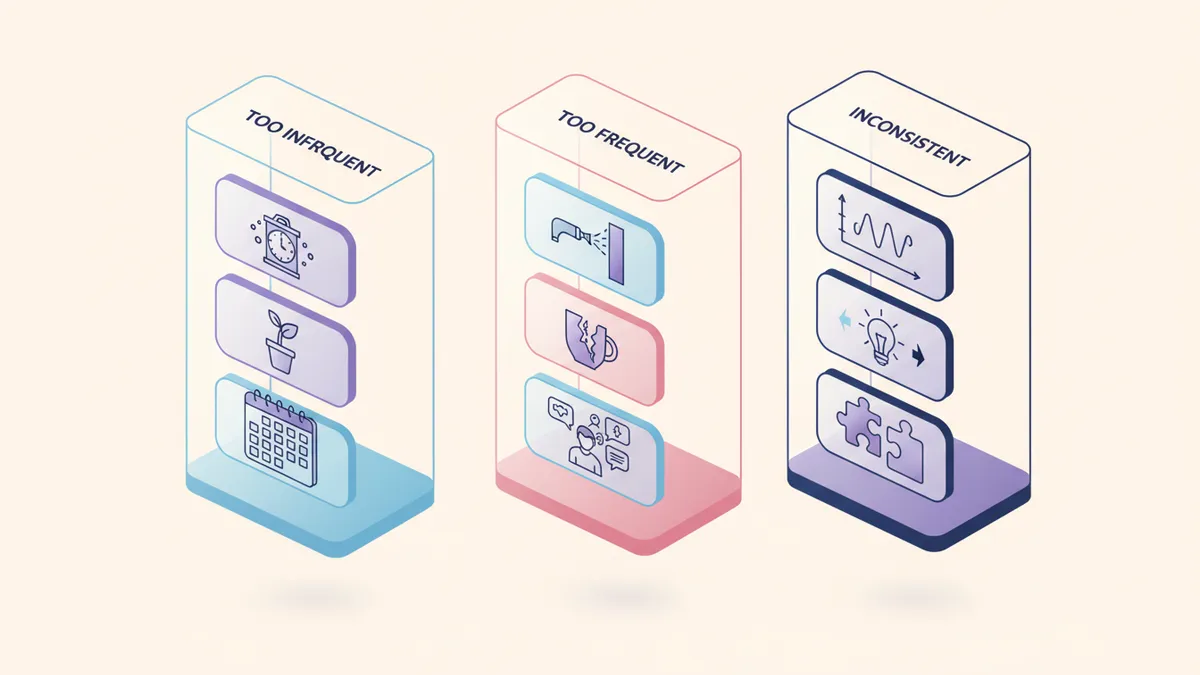
Prioritizing frequency over quality. Posting every day with low-effort content trains the algorithm that your posts don’t deserve reach. Three high-quality posts beat seven forgettable ones every time.
Ignoring platform differences. Posting the same content at the same frequency across every platform wastes effort. Each platform has its own optimal cadence and content format.
Not tracking results. If you don’t measure engagement rate alongside posting frequency, you’re guessing. What gets measured gets optimized.
Going dark without warning. Life happens. When you need a break, use a scheduling tool to keep a minimum cadence running. Even 2 posts per week during a slow period is better than going silent.
Your posting frequency action plan
- Pick one primary platform. Choose based on where your customers spend time.
- Start with 3 posts per week. Commit to this for 4 weeks straight.
- Batch and schedule. Create all content in one session, then schedule it.
- Track your engagement rate weekly. Look for trends, not single-post performance.
- Add frequency or platforms gradually. Only when you can maintain what you already have.
Consistency compounds. The stores that show up every week, month after month, are the ones that build audiences and drive sales from social media.
Ready to lock in your posting schedule? Try IDEQO’s free Content Calendar Generator to build a custom posting plan for your store. No credit card required.
Frequently Asked Questions
How often should a small e-commerce store post on social media?
Start with 3-5 posts per week on your primary platform. Consistency matters more than volume. A store that posts 3 times a week every week will outperform one that posts daily for a week then disappears for two.
Is it bad to post too much on social media?
It can be. Over-posting without quality leads to unfollows and lower engagement rates. Each platform has a sweet spot. On Instagram, more than 7 feed posts per week usually sees diminishing returns. On TikTok, you can post more because the algorithm surfaces each video independently.
What is the best time to post for e-commerce stores?
It varies by platform and audience. In general, weekdays between 9 AM and 12 PM get strong engagement. But your analytics will show you exactly when your customers are online. Check your platform insights and schedule posts for those windows.
Should I post the same content on every platform?
No. Adapt your content to each platform's format and audience. A product carousel on Instagram might become a quick demo video on TikTok and an idea pin on Pinterest. The core message can be the same, but the format should match the platform.
Can I automate my social media posting?
Yes, and you should. Scheduling tools let you batch-create content and publish automatically at optimal times. This keeps your posting consistent even when you are busy running your store. Tools like IDEQO let you schedule across all platforms from one dashboard.