

AI has fundamentally changed content creation. Generative AI users report saving an average of 11.4 hours per week. 71% of organizations now use it regularly, more than double the rate from 2023.
Key Takeaways
- AI-assisted, human-refined: The winning formula. Use AI for speed, add your voice for trust.
- 52% of consumers disengage when they suspect content is AI-generated. Editing matters.
- Prompt quality is everything: Specific, context-rich prompts produce dramatically better output.
- Brand voice first: Feed your tone, vocabulary, and examples into every prompt.
- Verify everything: Even top AI models hallucinate 0.7-1.5% of the time.
But here’s the catch. Most brands use AI wrong. They generate generic content, publish it without editing, and watch engagement drop. 52% of consumers reduce engagement when they suspect AI-generated content.
This guide shows you how to use AI the right way.

The AI content spectrum
Not all AI usage is equal. Think of it as a spectrum:

| Level | Human Input | Approach | Result |
|---|---|---|---|
| Full AI | 0% | Generate and publish with no editing | Terrible. Generic and detectable. |
| AI-first | 20% | Generate, light edit, publish | Mediocre. Saves time but loses audience. |
| AI-assisted | 50% | Generate, heavy edit, add personal insights | Good. Speed + authenticity. |
| Human-first | 80% | Use AI for ideation and research, write yourself | Best. Highest trust and engagement. |
The sweet spot for most brands is AI-assisted. You get the speed benefits while maintaining the authenticity your audience expects. Research confirms this: content marketers using AI complete work about 10% faster, but the real gains come from the workflow around AI, not from raw generation.
Building an AI content workflow
Here’s a production workflow that scales. Each phase builds on the last.
Phase 1: Ideation (5 minutes)
Use AI to brainstorm content ideas based on your content pillars. The key is giving enough context so AI understands your niche.

Strong prompt example:
You are a social media strategist for [your niche].
My audience is [describe audience demographics and pain points].
My content pillars are: [list your 3-5 pillars].

Generate 10 Instagram post ideas that are educational and actionable.
For each idea, include:
- A working title
- The content pillar it maps to
- A one-line hook for the caption
- Suggested format (carousel, Reel, single image)
Curate the best 3-5 ideas for the week. Throw out anything that feels generic. If you’ve seen the idea on 10 other accounts, skip it.
Phase 2: First draft (10 minutes per post)
Generate initial copy with your brand context baked in. The more specific your prompt, the less editing you’ll need.
Strong prompt example:
Write an Instagram caption about [topic].

Brand context:
- We sell [product/service] to [audience]
- Our tone is [casual/professional/witty], like talking to a friend
- We never use jargon or corporate speak
- We use short sentences, max 15 words

Caption structure:
- Hook in the first line (question, bold claim, or surprising stat)
- 3-4 lines of actionable value
- Clear CTA at the end (save, share, comment, or link in bio)
- Max 150 words total

Here's an example of a caption in our voice:
[paste your best-performing caption as reference]
Notice the difference? Giving AI an example of your actual voice produces output that’s 10x closer to usable than a generic prompt.
Phase 3: Human refinement (10 minutes per post)
This is the step most people skip. It makes all the difference.
- Add personal anecdotes or real examples from your experience. AI can’t fabricate your story.
- Adjust the tone to match your exact brand voice. Read it out loud. Does it sound like you?
- Add specific data or stats that you can verify. AI often fabricates numbers.
- Write a better hook. The first line determines whether people read the rest.
- Strengthen the CTA. Be specific about what you want readers to do.
Phase 4: Visual creation (5 minutes per post)
AI image generation has gotten good enough for social media visuals. Use it for:
- Custom graphics and illustrations
- Carousel slide designs from templates
- Thumbnail images for videos
- Transforming product photos into scroll-stopping content
IDEQO’s Visual Editor combines AI image generation with your Brand Kit, so every visual matches your brand automatically.
Phase 5: Schedule and repurpose
One piece of content should become five. AI excels at repurposing.
Take a blog post and prompt AI to create:
- 3 Instagram carousel slides summarizing key points
- A LinkedIn post with a different angle for a professional audience
- A TikTok script pulling the most surprising takeaway
- An email newsletter snippet
- 5 quote cards from the best lines
If you’re running a social media content calendar, batch your AI generation sessions. Create a full week of content in one sitting, then schedule it all. AI is especially powerful for scaling blog content for your online store, where one well-optimized post can drive traffic for months.
Prompt engineering that actually works
The difference between bad AI output and great AI output is almost always the prompt. Here are the principles that matter.
Give AI a role
Start every prompt with who the AI should be. “You are a social media copywriter for e-commerce brands” produces different output than a blank prompt.
Include examples
The single most effective prompt technique. Paste 2-3 examples of content in your voice. AI will mimic the style, tone, and structure.
Be specific about constraints
Vague prompts produce vague output. Specify:
- Word count or character limit
- Tone (and what to avoid)
- Structure (hook, body, CTA)
- Platform (Instagram vs. LinkedIn is very different)
- Audience (speak to them, not at them)
Use iterative refinement
Don’t try to get perfect output in one prompt. Start with a draft, then follow up:
- “Make the hook punchier. Use a surprising stat or question.”
- “Shorten every sentence to under 15 words.”
- “Rewrite the CTA to be more specific. Tell them exactly what to do.”
Save your best prompts
Build a prompt library. When a prompt consistently produces good results, save it as a template. This is the real time-saver. You stop writing prompts from scratch.
Training AI on your brand voice
Generic AI sounds like generic AI. Training it on your specific voice is what separates forgettable content from content that actually sounds like your brand.
How to build a brand voice prompt:
- Collect 10-15 of your best-performing posts. These represent your voice at its strongest.
- Identify patterns. Sentence length, vocabulary, humor style, how you open and close posts.
- Write a voice guide. Include: tone descriptors (3-5 words), words you always use, words you never use, sentence structure preferences, and 3 example posts.
- Feed it into every prompt. Paste your voice guide as context before asking AI to generate anything.
IDEQO’s Brand Voice feature does this automatically. It learns from your existing content and applies your voice to every AI-generated draft.
7 AI content mistakes to avoid
- Publishing without editing. AI content without a human touch reads as generic. 52% of consumers disengage when they detect it.
- Ignoring your brand voice. Every brand sounds identical when using default AI outputs. Feed your voice into every prompt.
- Skipping fact-checking. Even top models hallucinate 0.7-1.5% of the time. The Air Canada chatbot case proved brands are legally liable for AI-generated misinformation. Verify every stat, quote, and claim.
- Using vague prompts. “Write me an Instagram caption” will always produce mediocre output. Specificity is everything.
- Over-relying on trending formats. AI excels at copying trends. Your audience wants originality and your perspective.
- Not repurposing. If you’re using AI to create one post at a time, you’re missing the biggest efficiency gain. Repurpose every piece into 3-5 formats.
- Ignoring disclosure norms. The IAB released an AI Transparency Framework in 2026. The EU has draft labeling regulations. While social captions don’t always require disclosure, transparency builds trust, especially for product claims and testimonials.
Measuring AI content performance
Don’t assume AI content performs the same as fully human content. Track the difference.
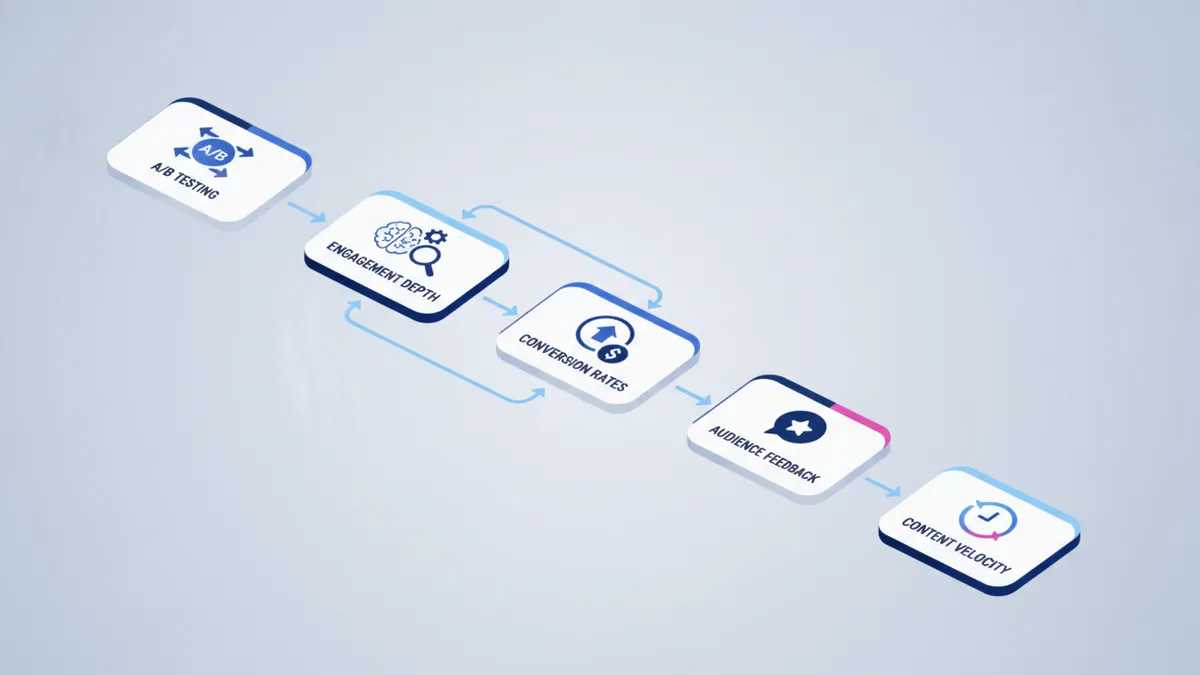
What to measure:
- A/B test AI-assisted vs. human-written posts on the same topic. Run at least 10 comparisons before drawing conclusions.
- Engagement depth. Not just likes. Track saves, shares, and comment quality. These signal whether people actually value the content.
- Conversion rates. Does AI-assisted content drive the same business results? Track clicks, signups, and sales.
- Audience feedback. Are people having meaningful conversations in the comments? Or just leaving emoji reactions?
- Content velocity. How much more are you producing? If AI lets you publish 3x more but engagement per post drops 50%, you’re losing.
Review monthly. Some content types work great with heavy AI involvement (product descriptions, hashtag research, repurposed formats). Others need more human input (thought leadership, personal stories, community responses).
The bottom line
AI is the most powerful content creation tool available today. 71% of organizations use it. Marketers save hours every week. But the brands winning aren’t the ones publishing the most AI content. They’re the ones using AI to handle repetitive work while investing human energy into strategy, creativity, and genuine connection.

Start this week:
- Pick your 2-3 weakest content tasks (ideation, first drafts, repurposing).
- Build a brand voice prompt using your best-performing content.
- Run AI-assisted workflows for one week.
- Compare engagement to your fully human content.
- Iterate based on data, not assumptions.
Scale your content without the burnout
IDEQO combines AI content creation with your Brand Voice and Brand Kit, so everything stays on-brand automatically. Plan with the Content Calendar. Generate with AI. Schedule across every platform from one dashboard.
Start free with IDEQO. Free plan available. No credit card required.
Frequently Asked Questions
How can e-commerce stores use AI for content creation?
E-commerce stores use AI to generate product descriptions, social media captions, blog posts, and email campaigns. The most effective approach is AI-assisted, human-refined. Use AI for first drafts and ideation, then edit for your brand voice. Tools like IDEQO combine AI generation with Brand Voice to keep everything on-brand.
What are the best AI content tools for Shopify store owners?
Top tools for e-commerce include IDEQO for end-to-end social media content (captions, images, scheduling with Brand Voice), ChatGPT and Claude for product copywriting, Midjourney and DALL-E for product image generation, and CapCut for AI-assisted video editing. Choose based on your content needs and platform focus.
How do you maintain brand voice when using AI for e-commerce content?
Create a detailed brand voice guide with tone descriptors, vocabulary preferences, and example posts. Feed this as context in every AI prompt. Always edit AI output to match your voice. Use tools like IDEQO's Brand Voice feature to train AI on your specific communication style so product captions and social posts always sound like you.
Can AI write good product descriptions and captions for e-commerce?
Yes, when combined with a Brand Voice profile and proper prompting. AI generates strong first drafts of product descriptions, social media captions, and email copy. The key is specificity: include your brand context, tone, audience, and examples in every prompt. Always review and edit before publishing.
How much time does AI save e-commerce stores on content creation?
E-commerce brands using AI report saving 8-12 hours per week on content tasks. The biggest gains come from product caption generation, content calendar planning, and repurposing one piece of content across platforms. AI cuts content creation time in half without sacrificing quality when properly edited.