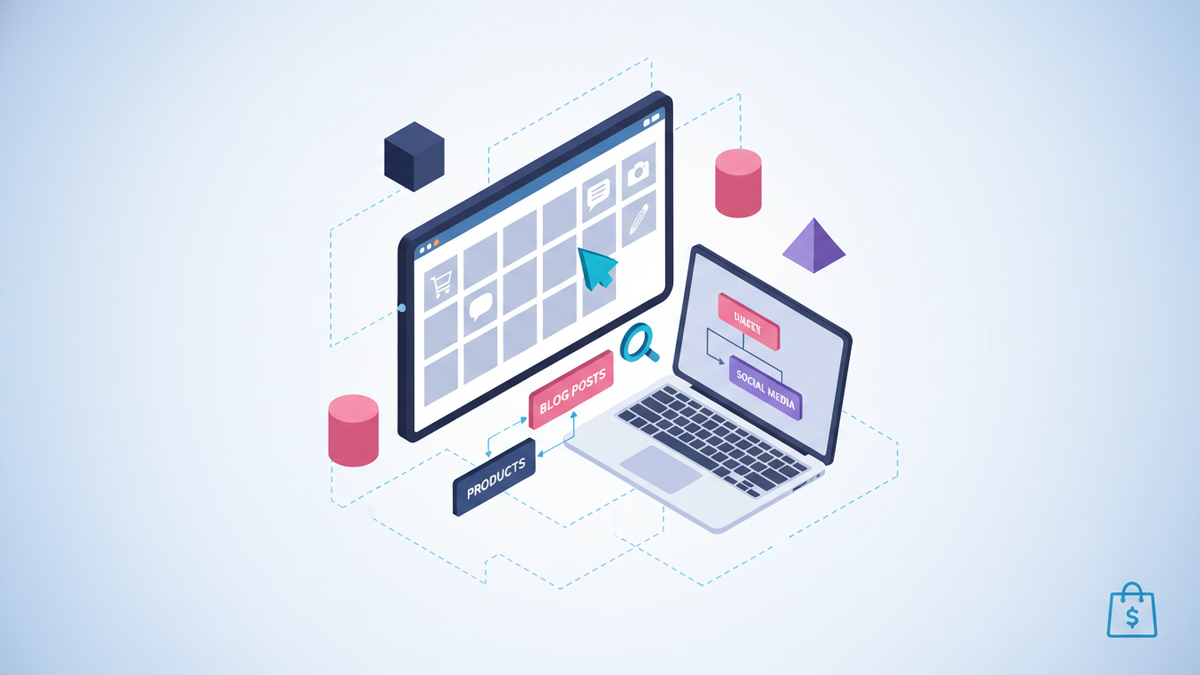
A blog isn’t just “nice to have” for your online store. It’s the single most scalable way to drive free, organic traffic. Every post is a new page Google can rank. Every ranking is a new stream of potential customers.
Key Takeaways
- A blog strategy starts with keyword research. Every post should target a specific keyword with proven search demand.
- Content pillars keep you focused. Define 3-5 core topics related to your products and audience. All content maps to one.
- One post per week is the minimum for meaningful results. Consistency builds authority and compounds traffic over time.
- Every post should link to your products. Blog traffic becomes sales through internal linking. No links means readers leave without buying.
- Repurpose everything. One blog post becomes 5-10 social media posts. Plan blog and social content together.
Why most online stores skip blogging (and why that’s a mistake)
“I sell products. Why would I write articles?”
Because your product pages can only rank for so many searches. They target people who already know what they want. “Buy organic cotton sheets” has maybe 500 monthly searches. “Best sheets for hot sleepers” has 5,000. That second search is a blog post waiting to be written. And the person searching it is your customer. They just don’t know it yet.
Stores without blogs leave thousands of keywords on the table. They rely entirely on product-page SEO and paid ads. When ad costs rise, they have no fallback. When a competitor runs a sale, they lose traffic.
A blog builds an organic traffic foundation that doesn’t depend on ad budgets.
Building your content strategy from scratch
A content strategy answers three questions: What do you publish? When do you publish? How do you distribute? Here’s how to answer all three.
Define your content pillars
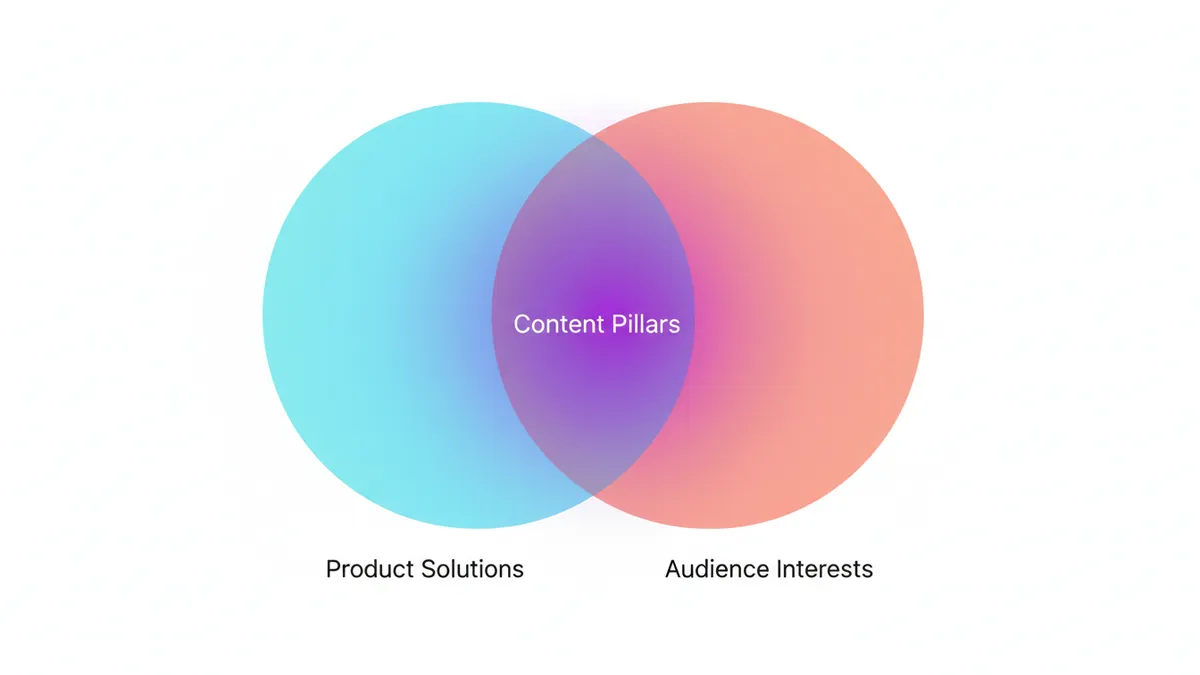
Content pillars are the 3-5 broad topics your blog covers. They should connect to your products and match what your audience cares about.
How to find your pillars:
- List the problems your products solve.
- List the interests and lifestyles of your target customer.
- Find the overlap. Those are your pillars.
Example for a home decor store:
| Pillar | Connection to Products | Example Topics |
|---|---|---|
| Small space living | Furniture, storage solutions | Decorating a studio apartment, maximize small rooms |
| Interior design trends | All home products | Trending colors, modern vs traditional |
| DIY and styling tips | Decor, accessories | How to arrange shelves, gallery wall guide |
| Seasonal home updates | Seasonal collections | Summer refresh, holiday decorating |
| Buying guides | Specific products | Best coffee tables under $200, rug size guide |
Everything you write should map to one of these pillars. If a topic doesn’t fit, it probably isn’t right for your brand.
Research keywords for each pillar
Within each pillar, identify 10-20 keywords with search demand. This becomes your content roadmap.
Use e-commerce keyword research methods: Google Keyword Planner, Autocomplete, “People Also Ask,” and competitor analysis.
Example keyword map for “Small space living” pillar:
- how to decorate a studio apartment (1,600/mo)
- small living room furniture ideas (800/mo)
- storage solutions for small bedrooms (500/mo)
- how to make a small room look bigger (2,400/mo)
- best furniture for small spaces (600/mo)
That’s 5 blog posts from one pillar. Each one targets a specific search. Each one links to your products naturally.
Set your publishing cadence
One post per week is the gold standard for small e-commerce stores. That’s 52 posts per year. Enough to build real authority and target dozens of keywords.
If weekly feels overwhelming, start with two posts per month. That’s 24 per year. Still enough to make a meaningful difference.
The non-negotiable rule: Whatever cadence you choose, maintain it. Consistency signals to Google that your site is active and trustworthy. Inconsistent publishing, three posts one month, nothing the next, undermines your SEO.
Block a specific day for writing. Tuesday morning. Thursday afternoon. Make it non-negotiable. Batch-write when possible. Two to three hours can produce two weeks of content.
Writing blog posts that drive traffic and sales
Every post should earn its place. That means it needs to rank on Google, provide genuine value, and guide readers toward your products.
Structure that ranks
Follow this template for every post:
Title (H1): Includes the primary keyword. Under 60 characters. Actionable.
Introduction: State the problem or question. Include the primary keyword. Tell the reader what they’ll learn.
H2 sections: Each major point gets an H2. Include keyword variations in 1-2 of them.
Content depth: 1,500 words minimum. Cover the topic thoroughly. Answer every question a reader might have.
Conclusion and CTA: Summarize the key takeaways. Tell the reader what to do next.
Internal linking is your sales mechanism
Blog traffic is worthless if visitors read and leave. Internal links are the bridge from content to commerce.
Rules for internal linking:
- Every post links to at least one product or collection.
- Every post links to at least one other blog post.
- Use descriptive anchor text. “Our free social media tools” not “click here.”
- Make links contextual and helpful. They should feel like recommendations, not ads.
If you write a post about decorating small spaces, link to your compact furniture collection. If you write about skincare routines, link to your cleanser product page. Natural, helpful, and conversion-driving.

Optimize for SEO
Beyond the keyword in the title and first paragraph, optimize:
- Meta description: Under 160 characters, includes the keyword, gives a reason to click.
- URL slug: Short and keyword-rich.
/blog/small-room-decorating-guidenot/blog/how-to-decorate-and-style-your-small-room-to-look-bigger-tips. - Image alt text: Descriptive with keyword where natural.
- H2 headings: Include keyword variations in 1-2 section headings.
For a complete SEO walkthrough, see our Shopify blog SEO guide.
Repurposing blog content across platforms
This is where your blog strategy multiplies in value. One post isn’t just a blog post. It’s the source material for your entire content operation.
Blog to social media pipeline
From one blog post, create:
- 2-3 Instagram carousels pulling key insights
- 1 Reel or TikTok summarizing the main takeaway
- 3-5 Pinterest pins with different angles
- 1 LinkedIn post with a professional angle
- 1 email newsletter summarizing the post
- 3-5 X posts with individual tips from the article
That’s 12-18 pieces of content from one blog post. Plan this pipeline alongside your social media content calendar so everything is coordinated.
AI-assisted repurposing

Manually rewriting a blog post into 15 social media posts takes hours. AI content tools can generate these variations in minutes. Feed the blog post to AI, specify the platform and format, and edit the output for your brand voice.
IDEQO’s Bulk Content Generator can turn one blog post into a month of social content across multiple platforms. Write once, distribute everywhere.
Content calendar: putting it all together
A content strategy without a calendar is just a collection of ideas. The calendar turns strategy into execution.
Monthly planning process
Week 1 of each month:
- Review last month’s performance (traffic, rankings, engagement).
- Choose 4 blog topics from your keyword map for the coming month.
- Map social media content from each blog post.
- Assign writing and publishing dates.
Sample monthly calendar
| Week | Blog Post | Primary Keyword | Social Content From Post |
|---|---|---|---|
| 1 | How to style a small living room | small living room ideas | 3 carousels, 1 Reel, 2 pins |
| 2 | Best coffee tables for small spaces | coffee tables small spaces | 2 carousels, 1 TikTok, 3 pins |
| 3 | DIY gallery wall guide | how to make gallery wall | 3 carousels, 1 Reel, 2 pins |
| 4 | Holiday gift guide: home decor | home decor gift guide | 4 carousels, 1 Reel, 5 pins |
Every blog post feeds social content. Every social post links back to the blog. The cycle reinforces itself.
Measuring your blog strategy
Track these monthly to know if your strategy is working.
| Metric | Goal | Where to Track |
|---|---|---|
| Organic blog traffic | Growing month over month | Google Analytics |
| Average time on page | 3+ minutes per blog post | Google Analytics |
| Keyword rankings | Top 20 for target keywords within 6 months | Google Search Console |
| Internal link clicks | Blog visitors clicking through to products | Google Analytics |
| Blog-attributed revenue | Trackable sales from blog traffic | Shopify analytics + UTM tags |
Timeline expectations
- Month 1-2: Posts get indexed. Minimal organic traffic. Social and email distribution are your main traffic sources.
- Month 3-4: Long-tail keywords start ranking. Organic traffic appears.
- Month 6: Multiple posts ranking. Organic traffic becomes a meaningful source.
- Month 12: Compounding effect. Your traffic base grows even on weeks you don’t publish.
The stores that see the best results from blogging are the ones that push past the first three months when results feel slow.
Start your blog content strategy today

- Define 3-5 content pillars that connect your products to your audience’s interests.
- Research 20 keywords across your pillars using free tools.
- Write and publish your first post this week. Target the keyword with the best combination of volume and low competition.
- Add internal links to at least one product and one other blog post.
- Repurpose into social content using your content calendar.
- Commit to one post per week for 12 weeks. Evaluate at the end.
Your blog is the engine. Your products are the destination. Content strategy is the map that connects them.
Ready to plan your blog and social content in one place? Start free with IDEQO. Build your content calendar, generate posts with AI, and schedule across every platform. Free plan available. No credit card required.
Frequently Asked Questions
Do online stores really need a blog?
Yes. A blog lets you target informational keywords that product pages can't rank for. It drives free organic traffic, builds trust with potential customers, and creates content you can repurpose across social media and email. Stores with active blogs see significantly more organic traffic than those without.
How often should an online store publish blog posts?
Start with one post per week. Consistency beats frequency. If you can only manage two posts per month, do that reliably rather than burning out on a daily schedule. After 3 months, evaluate your traffic data and increase cadence if your capacity allows.
What should an online store blog about?
Blog about topics your target customers search for. How-to guides, buying advice, product comparisons, seasonal content, and educational posts related to your niche all work well. The key is choosing topics with proven search demand through keyword research.
How do I turn blog traffic into sales?
Internal linking is the bridge. Every blog post should link to at least one relevant product or collection. Use natural, contextual links that add value to the reader. Add product recommendations, buying guides, and clear CTAs that guide readers toward your store.
Can AI help with blog content for my online store?
AI is excellent for research, outlines, and first drafts. It can cut your writing time in half. The key is editing AI output for your brand voice, adding unique insights, and verifying all facts. Use AI as an assistant, not a replacement for original thinking.