


The week after a Shopify sale needs four posts: a thank-you Story the morning after, a packing clip, an honest post about what sold, and one fall product or restock. Put them on the same two platforms you ran the sale on, skip the second discount, and schedule all four before the sale starts. That is Thank-Pack-Sold-Fall, and it fills the week that goes quiet when nobody planned it.
Call that empty week the post-sale drop-off. You packed orders all weekend. The sale posts have expired. Nobody wrote Tuesday’s caption, so Tuesday gets nothing, and the rest of the week follows. That is what happens when the plan stops at the last-call post.
Shopify’s retail calendar does not stop there. It describes Labor Day as the end of summer and the start of fall promotions, tells merchants to use September to finalize early holiday plans, especially inventory, and marks September 22, the first day of fall, as the moment to debut a fall lookbook or product line (Shopify retail holiday calendar). Nowhere does it say go dark after the sale.
Labor Day 2026 is behind us, so this guide uses it as the worked example. The same week works after any sale that ends: a counter offer during Prime Big Deal Days, a Halloween drop, or Cyber Monday.
Key Takeaways
- Tuesday is still the campaign: When a sale ends on a holiday Monday, Tuesday is day one of the recovery week. Schedule it before Monday night.
- Four posts cover seven days: A thank-you Story, a packing clip, what sold, and one fall SKU or restock.
- Same two platforms as the sale: Do not open a third channel to make a quiet week look busy.
- Two scheduled posts beat a quiet week: Use your posting baseline as the floor. Skip algorithm percentages nobody sourced.
Why the week after a sale matters now
Fall is a run of short sales with gaps between them. Labor Day closed on Monday, September 7. Amazon’s Prime Big Deal Days runs October 6 and 7 (Amazon), so a counter offer timed to it closes on a Wednesday. Halloween falls on Saturday, October 31, and Black Friday through Cyber Monday runs November 27 to 30 (Shopify retail holiday calendar).
Every one of those sales ends, and every ending leaves a week.
IDEQO’s posting frequency guide states the cost plainly: when you go quiet for a week, your reach drops. It also sets the floor: even two posts a week during a slow period is better than going silent. The week after a sale is that slow period, and the week you have the least time to write.
The Labor Day social plan already covers day one: a thank-you Story, one fall arrival or restock, and notes on what sold. It also warns that Sweep is where many stores disappear. Thank-Pack-Sold-Fall spreads that Tuesday across seven days, one job per post, so nothing gets written while the boxes go out.
The Thank-Pack-Sold-Fall framework
Thank-Pack-Sold-Fall is four posts in the seven days after a sale closes. Each post has one job. None of them is a new offer.

The day labels assume a sale that ends on a Monday, like Labor Day or Cyber Monday. If yours closes on another day, the day after the close is Thank.
Thank (Tuesday)
Goal: close the sale out loud and take the offer voice off.
Post one thank-you Story the morning after the sale. Say it is over, thank the people who ordered, and say that orders are being packed. No code. No “last chance.” No “extended by popular demand.”
The offer voice has to come off here. For three or four days every caption said now, ends, hurry. Tuesday should sound like the person who packs the boxes.
What goes in the frame:
- One photo from the sale weekend, reused, not reshot
- One line: thank you, the sale is closed
- One packing line you control, with no delivery promise
- A link sticker to your main collection, not the sale collection
Answer the weekend’s leftover comments and DMs that morning, in real time.
Pack (Wednesday)
Goal: prove the sale was real without selling it again.
A packing clip shows orders moving, which no sale graphic can. Film 10 to 20 seconds during the weekend: tissue, tape, a stack of finished parcels. Post it on Wednesday as a Reel or a still on both platforms.
Keep the caption short. “Weekend orders going out” is enough. Pack is proof, not an offer.
Before you post, check the frame:
- No customer names or addresses on visible labels
- No ship-by or arrive-by date unless you have confirmed it yourself
- No “almost gone” unless Thursday’s count will back it up
Sold (Thursday)
Goal: tell the truth about stock.
Thursday is the what-sold post: a short carousel of the products that moved, with honest inventory notes. Sizes gone. Colors left. What comes back and what does not.
It is the easiest post to skip and the most useful for anyone who missed the sale. It answers the DM they are about to send: is it still available?
Rules for the Sold post:
- Count first, write second. Check inventory in Shopify admin on Thursday morning.
- Say what is gone and what is left. “Rust is gone in medium and large, small is left” is honest scarcity. “Almost gone!” is not.
- Point restocks at a list. If a product is coming back, say so and link a restock signup. The restock announcement guide covers the sold-out caption and the form.
- Say when something is done for the season. Gone until next year is a real reason to buy one of the last few. Back next month is not.
Fall (Friday to next Monday)
Goal: hand the feed to the next season.
Friday’s post features one fall product or one restock. One. Not a collection launch and not a second Labor Day sale. It tells followers the store has moved on.
Point it at your live fall collection page. The fall collection social plan owns the full season story with Mood-Map-Merch-Moment. This post is the handoff, not the launch. If Halloween is your next campaign, the Fall post can double as a first quiet hint for the Halloween social plan.
Saturday to Monday, schedule one leftover if you have it: a review, a customer photo, a second angle of the fall SKU. If not, skip it. Four posts already clear the two-a-week floor.
Worked example: one recovery week, day by day
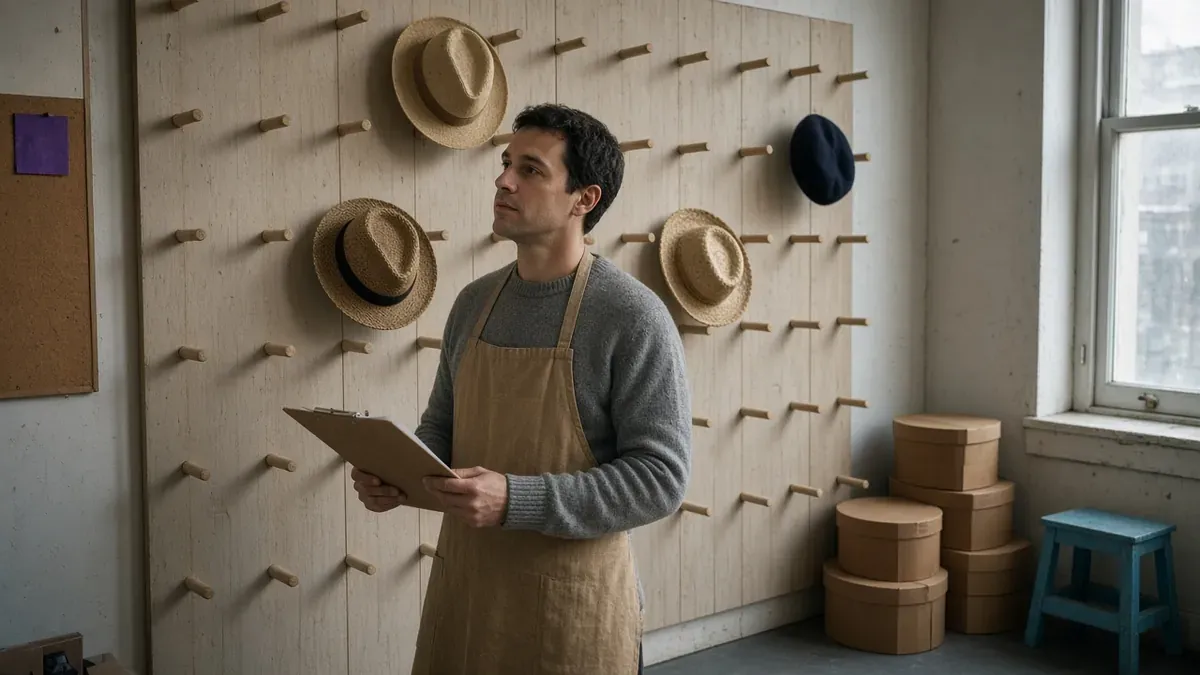
Here is the week for a small hat shop that ran a Labor Day weekend sale on Instagram and Facebook. Swap in your own products.
Asset list (minimum, all reused from the sale):
- 1 thank-you Story frame: a sale photo plus one line of text
- 1 packing clip, 10 to 20 seconds, filmed during the weekend
- 1 what-sold carousel: three to five product photos from the sale, plus one frame for stock notes
- 1 fall SKU still: the single product you want to lead the next month
Reuse sale photos. Do not shoot a new campaign.
| Day | Phase | Post | Where it runs | Where it links |
|---|---|---|---|---|
| Tuesday | Thank | Story: “That’s a wrap on the sale. Thank you for every order. We’re packing all week.” | Instagram and Facebook Stories | Main collection |
| Wednesday | Pack | Reel or still of the packing table: “Weekend orders going out.” | Instagram and Facebook feeds | Main collection |
| Thursday | Sold | Carousel: “What sold: the rust felt is gone in M and L, small is left. The straw boater is done for the season.” | Instagram and Facebook feeds | Restock list or product pages |
| Friday | Fall | One still of the wool felt in rust: “One for October.” | Instagram and Facebook feeds | Fall collection |
| Saturday to Monday | Fall | Optional leftover: one review or customer photo | Instagram feed | Fall collection |
Queue all four before the sale starts. Stores argue about scheduling. In a Shopify Community thread asking whether merchants use scheduling tools or post in real time, replies split: some schedule planned campaign posts and post live for replies and Stories, others post everything in real time (Shopify Community). Split the recovery week the same way. The four planned posts are scheduled. Replies, DMs, and order questions stay live, so packing days stop being writing days.
How does the week shift for your next sale?
Find the last day of the sale. Thank goes out the next morning, then Pack, Sold, and Fall follow one per day.
| Sale | Last sale day | Thank goes out |
|---|---|---|
| Labor Day (the worked example) | Monday, September 7 | Tuesday, September 8 |
| Prime Big Deal Days counter offer | Wednesday, October 7 | Thursday, October 8 |
| Black Friday through Cyber Monday | Monday, November 30 | Tuesday, December 1 |
The Prime Big Deal Days plan already puts a closed-and-thank-you Story on October 8 in its Carry phase, so Pack, Sold, and Fall fill out that week. After Cyber Monday, the BFCM social media plan calls the tail Softland. Same job, and the Fall slot becomes one gift-ready product or your gift card.
Two platforms max: the same pair as the sale
Keep the recovery week on the two platforms you ran the sale on. Buyers and near-buyers saw the sale there, so that is where a thank-you, a packing clip, and honest stock notes land.
On your primary platform, use Stories for Thank and replies, and the feed for Pack, Sold, and Fall. On the second platform, feed posts are enough.
Do not add TikTok or any other third channel as a recovery channel. Nobody there is waiting for the thank-you, and you would be learning it during your busiest shipping days. If you have not settled on two platforms yet, how to start social media for a Shopify store walks through choosing them with Claim-Choose-Create-Check.
Common mistakes the week after a sale
Going silent after Monday night. The sale closed. The campaign did not.
Writing a second discount to keep momentum. It tells everyone the end time was not real, and it tells Saturday’s buyers that waiting would have paid.
Opening a third platform the week after. Nobody there saw the sale, and you have no time to learn it while orders ship.
Drafting Tuesday captions on Tuesday morning. Tuesday morning is for packing and replies. Write the four posts when you batch the sale.
Leaving the bio on a dead sale collection. Every tap lands on an expired offer. Move your link in bio to the main or fall collection on Tuesday morning.
Citing an algorithm penalty percentage you did not source. If you cannot link the source, do not post the number. Nobody needs a scare statistic to see a thank-you Story.
Put Thank-Pack-Sold-Fall to work before your next sale
Before your next sale weekend, queue the four recovery posts right after the sale posts. If you use the Labor Day structure, they sit next to Tease-Live-Sweep on the same calendar.
- Thank: One Story frame, scheduled for the morning after the close. Sale closed, thank you, orders in the queue.
- Pack: One packing clip filmed during the sale, scheduled for day two.
- Sold: One carousel drafted with the sale photos, scheduled for day three, with stock notes you add after Thursday’s count.
- Fall: One fall SKU or restock, scheduled for day four, linked to a live collection.
Then do the one job that cannot be scheduled: count what is left.
If you want the sale and the recovery week in one plan, IDEQO’s free content calendar can map the month around your sale, and IDEQO can schedule all four recovery posts before the first sale post goes out. Start free with IDEQO. Free plan available. No credit card required.
Frequently Asked Questions
When does a Labor Day or holiday weekend sale campaign actually end?
The Tuesday after, not Monday night. When a sale closes on a holiday Monday, as Labor Day does, the week that follows still belongs to the campaign: a thank-you Story on Tuesday, a packing clip on Wednesday, an honest what-sold post on Thursday, and one fall product on Friday. IDEQO's Labor Day plan makes the same point in its Sweep phase: Tuesday is part of the campaign.
How many posts should I publish in the slow week after a sale?
Even two scheduled posts beat silence. IDEQO's posting frequency guide says that when you go quiet for a week, your reach drops, and that two posts a week during a slow period is better than going silent. Thank-Pack-Sold-Fall gives you four posts, so you clear that floor without writing anything new during the packing days.
Should I change platforms after the sale?
No. Stay on the same two platforms you ran the sale on. The people who bought and the people who almost bought saw the sale there, so that is where a thank-you and honest stock notes are useful. Opening a third channel, such as TikTok, in a packing week means writing for an audience that never saw the sale.
Can I reuse this after Black Friday and Cyber Monday?
Yes. IDEQO's BFCM plan calls that tail Softland, and it is the same job: thank buyers, show the packing, note what sold, and point at what is next. Cyber Monday 2026 is November 30, so the thank-you goes out Tuesday, December 1, and the fall slot becomes one gift-ready product or your gift card.
When should I schedule the recovery week?
Before the sale starts, not Tuesday morning. Draft all four posts in the same session as your sale posts and schedule them. The only edit left for the week itself is the what-sold caption: count stock in Shopify on Thursday morning and add the real numbers before it publishes.